Original: $65.00
-70%$65.00
$19.50The Story
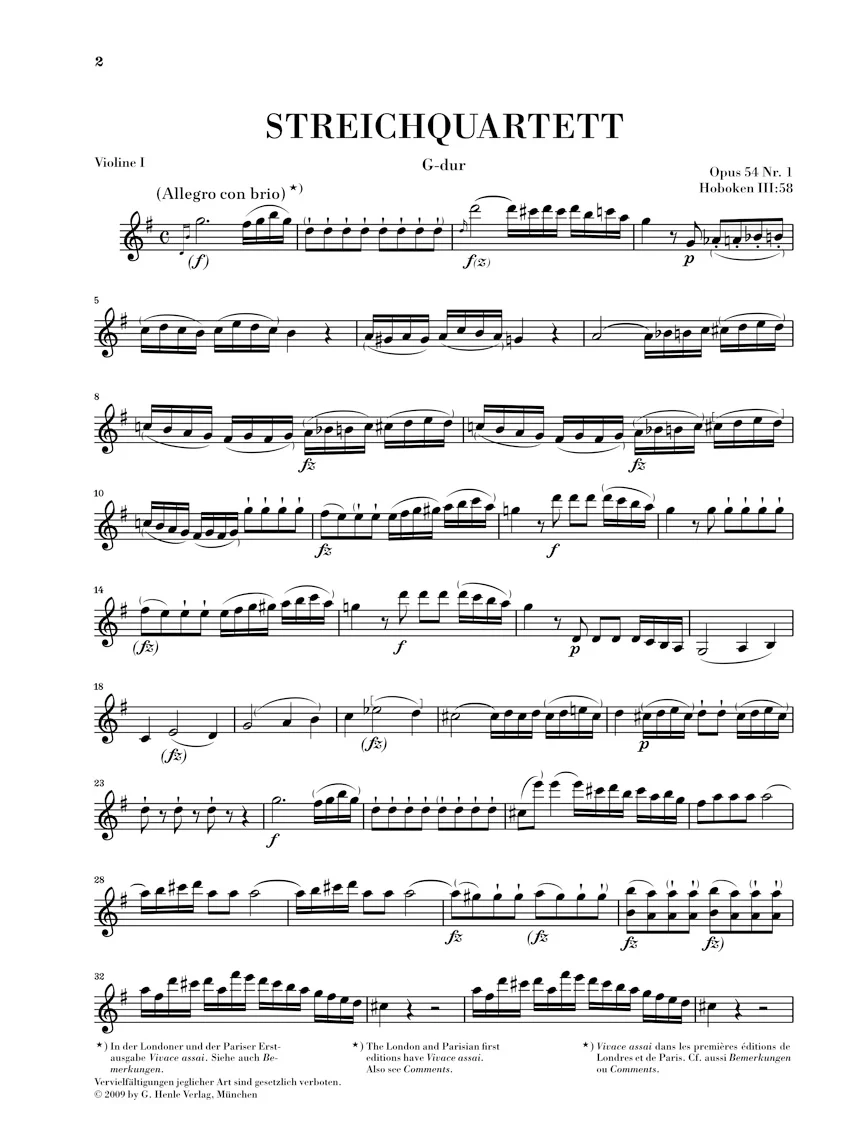
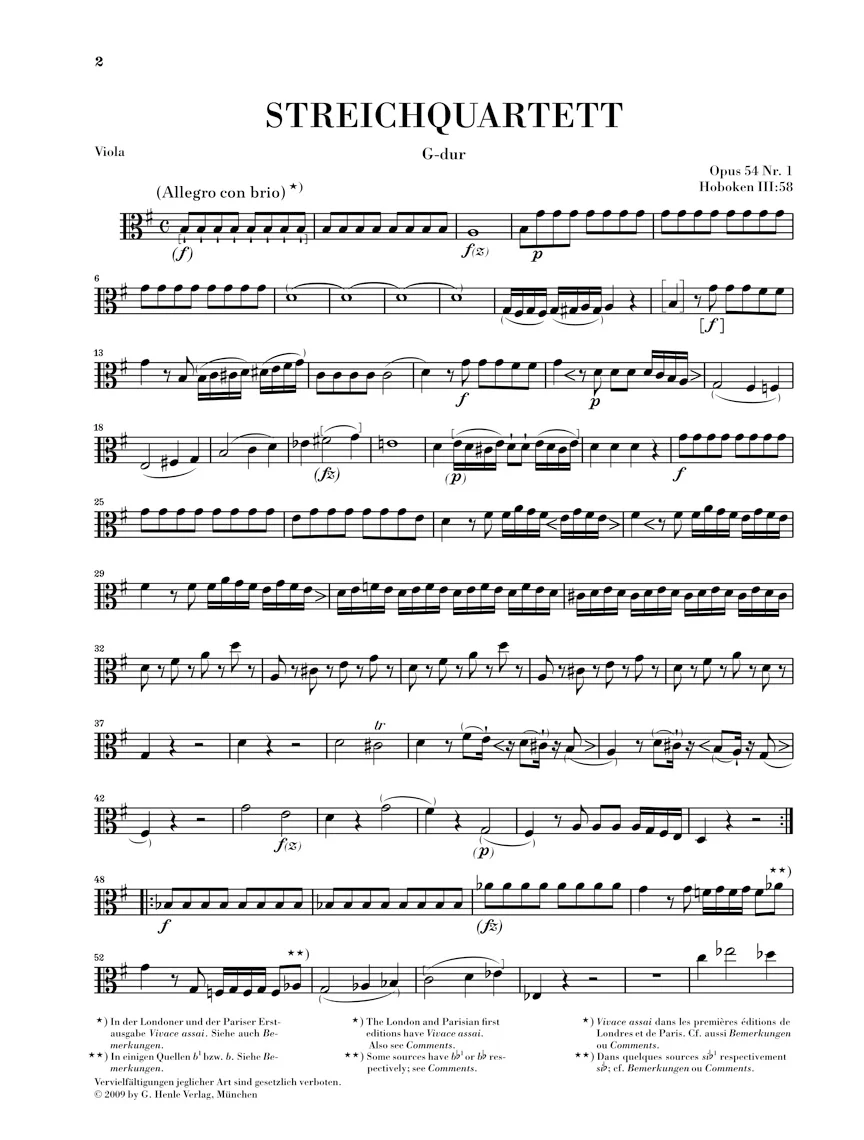
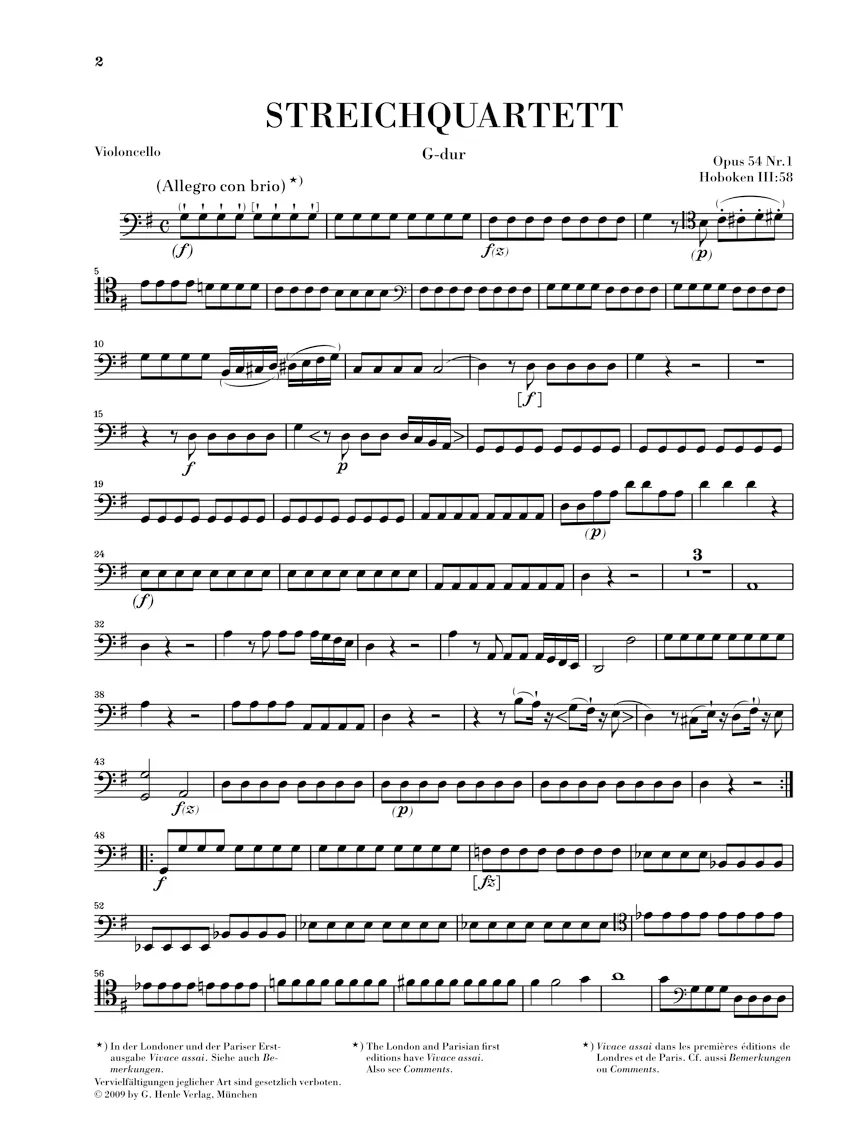
Cello Part Mislabeled as Viola part, with the first and last pages being viola instead of cello. There are photocopies of the correct pages in the part. There are also finger prints on front and back of the cover. Music is otherwise unaffected and in excellent condition.
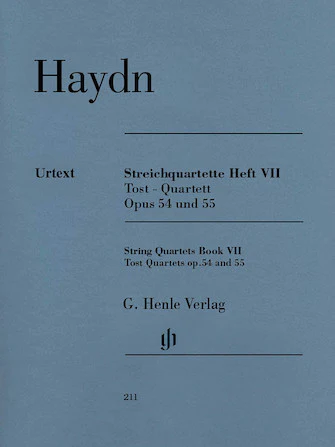
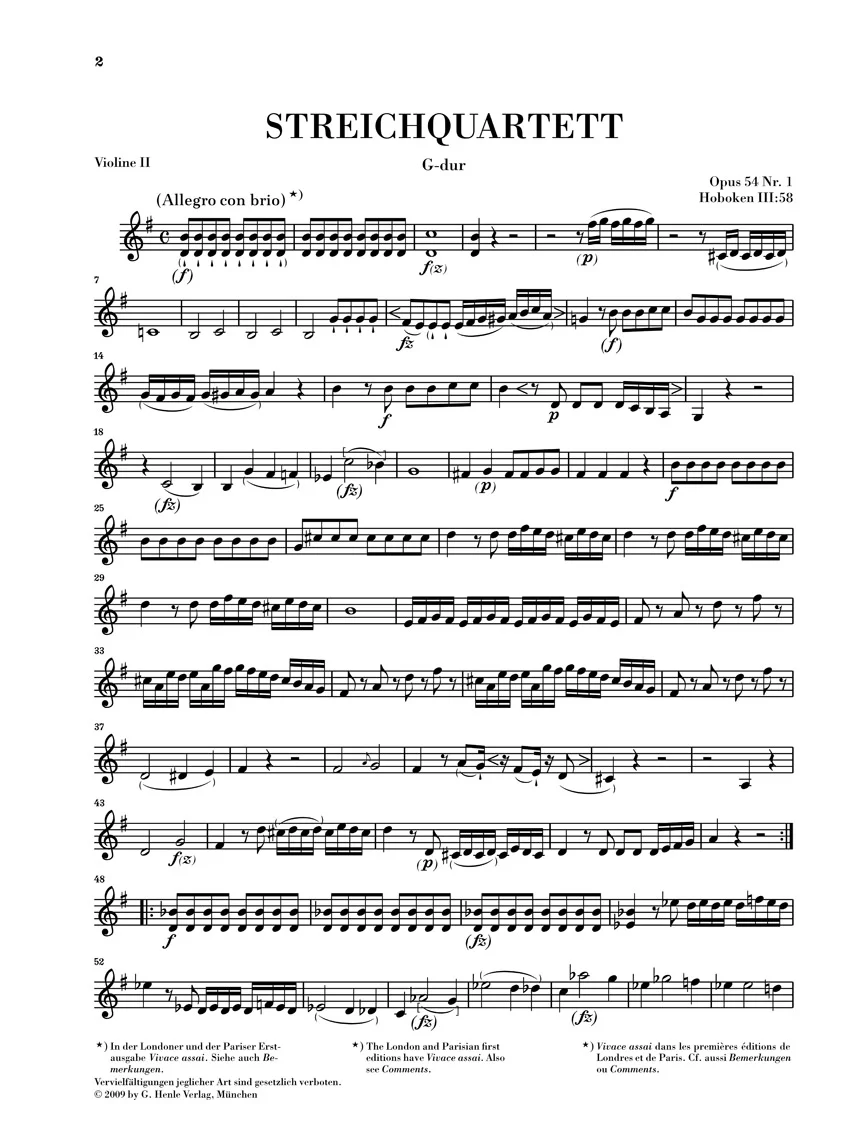
The chamber music world has been eagerly awaiting this – Haydn's string quartets are finally available in Henle Urtext quality! The last edition to be finished contains the String Quartets op. 54/55, sometimes also known as the “First Tost Quartets”. Contrary to what the opus numbers might suggest, it is a cohesive cycle of six works. Mozart's influence is felt more deeply, the forms are more diverse and the first violin is every now and then required to do real acrobatics. In this volume in particular several treasures can be found that are not often played. We are delighted to be able to release this last volume in a total of twelve with its accompanying study edition.
Details & Craftsmanship
Every detail has been carefully considered to bring you the perfect product.
Details & Craftsmanship
Every detail has been carefully considered to bring you the perfect product.
Details & Craftsmanship
Every detail has been carefully considered to bring you the perfect product.
Details & Craftsmanship
Every detail has been carefully considered to bring you the perfect product.
Description
Cello Part Mislabeled as Viola part, with the first and last pages being viola instead of cello. There are photocopies of the correct pages in the part. There are also finger prints on front and back of the cover. Music is otherwise unaffected and in excellent condition.
The chamber music world has been eagerly awaiting this – Haydn's string quartets are finally available in Henle Urtext quality! The last edition to be finished contains the String Quartets op. 54/55, sometimes also known as the “First Tost Quartets”. Contrary to what the opus numbers might suggest, it is a cohesive cycle of six works. Mozart's influence is felt more deeply, the forms are more diverse and the first violin is every now and then required to do real acrobatics. In this volume in particular several treasures can be found that are not often played. We are delighted to be able to release this last volume in a total of twelve with its accompanying study edition.