Original: $44.95
-70%$44.95
$13.49The Story
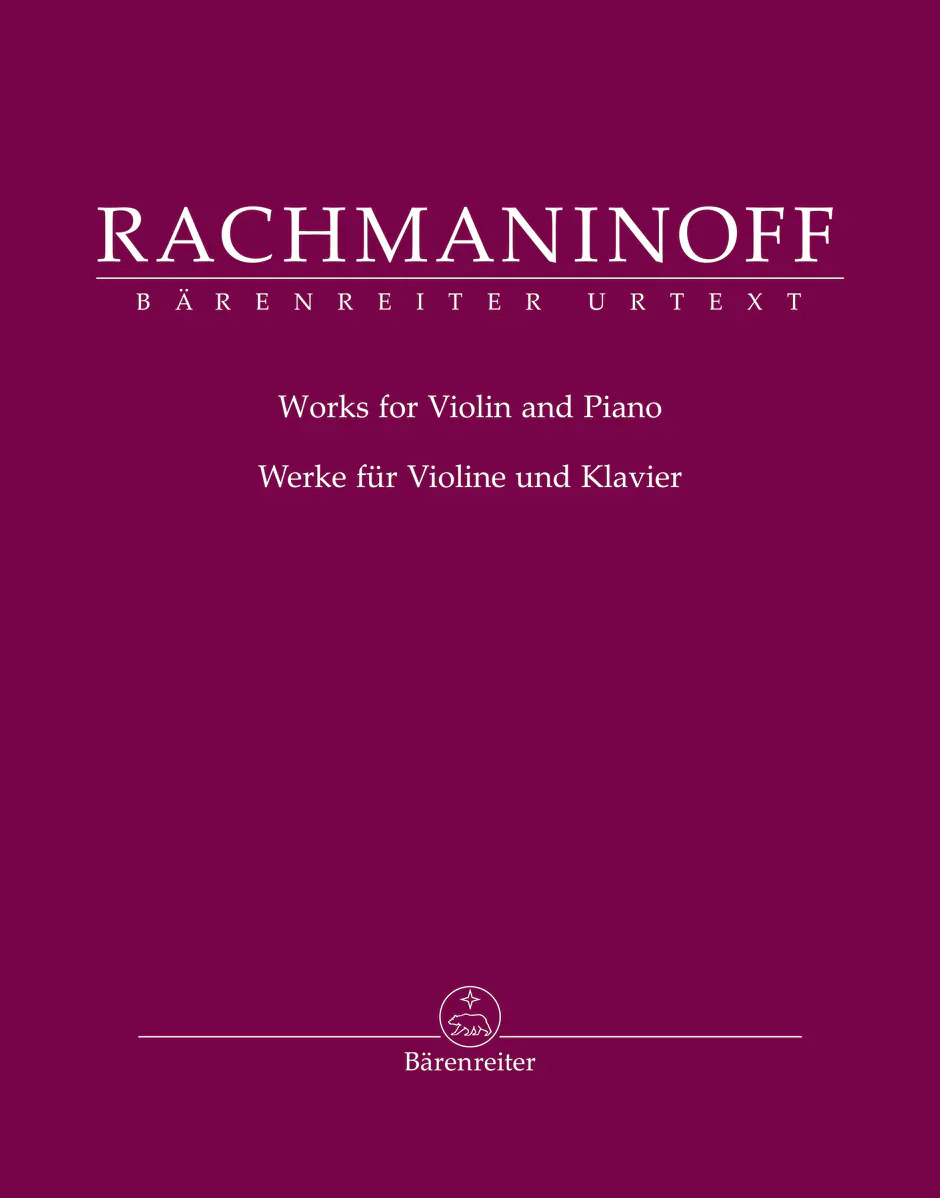
Although Sergei Rachmaninoff only left behind a relatively small oeuvre for string instrument and piano in comparison to his more substantial groups of works, these few works date from all phases of his compositional activity. Their patrons, dedicatees and important performers often came from his closest musical circle.
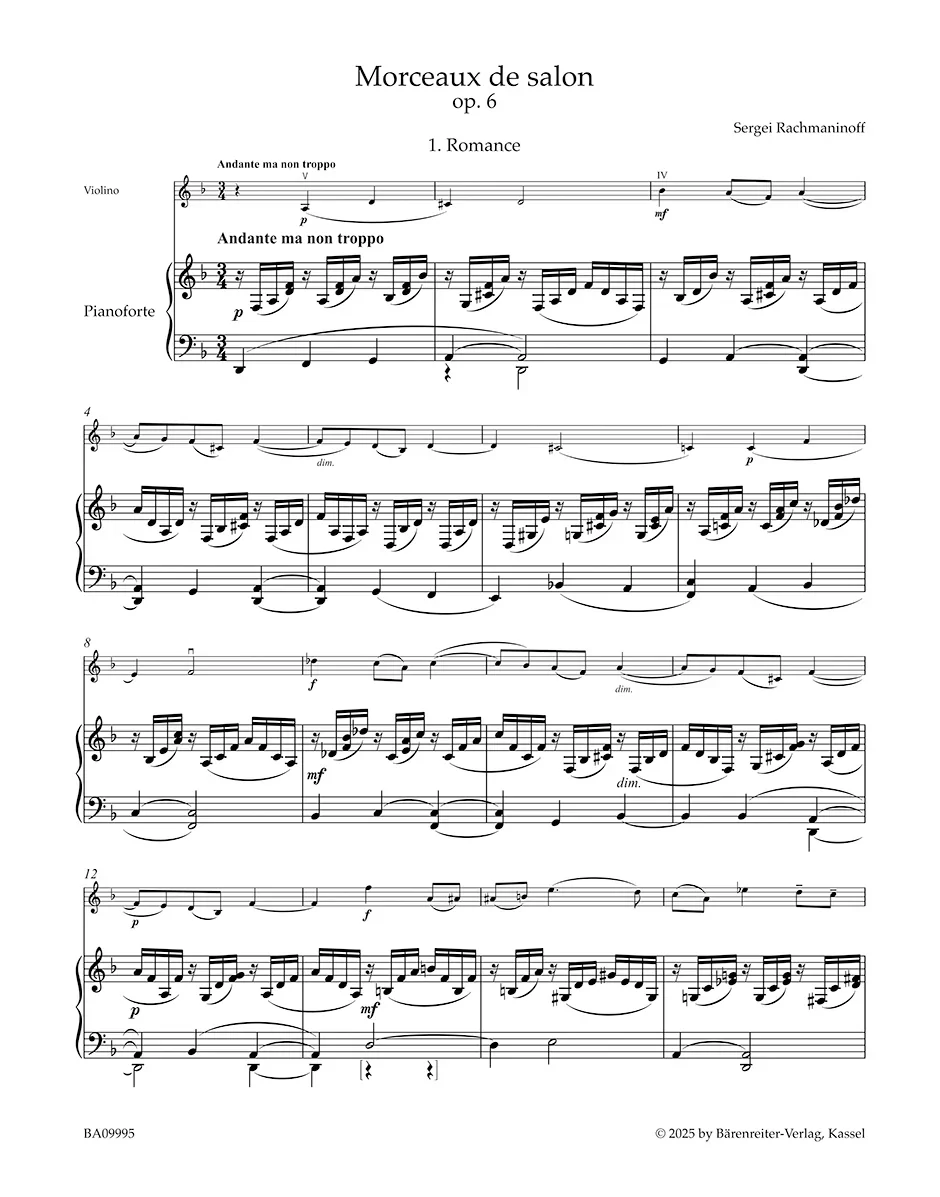
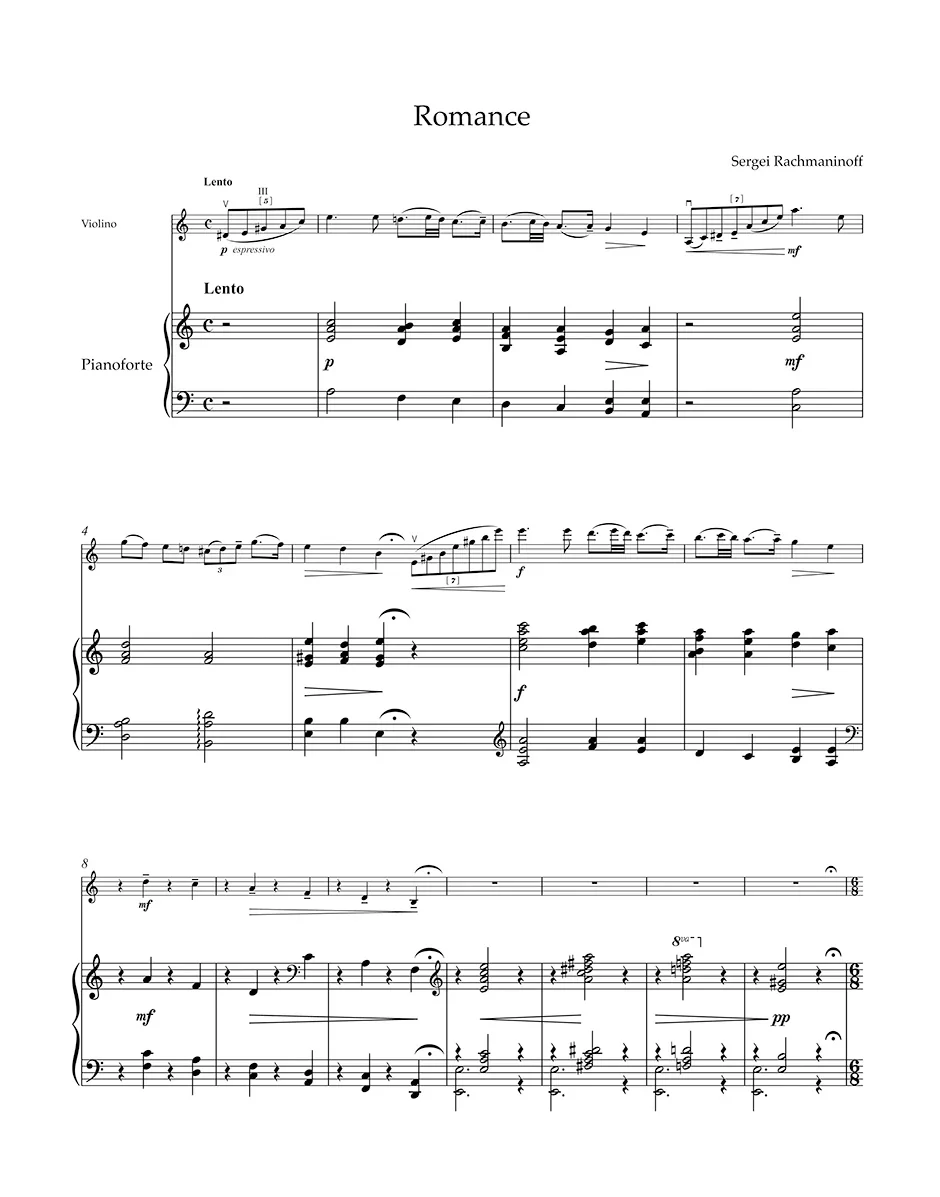
The chamber music for violin and piano includes the "Morceaux de salon", Op. 6 (consisting of "Romance" and "Danse hongroise"), a "Romance" in A Minor that was only published posthumously and Rachmaninoff's arrangement of Modest Mussorgsky's "Hopak", the finale of his unfinished opera "The Sorochyntsi Fair". These works were written as part of his friendship or indeed collaboration with violinists such as Julius Conus (1869–1942) and probably Fritz Kreisler (1875–1962).
Details & Craftsmanship
Every detail has been carefully considered to bring you the perfect product.
Details & Craftsmanship
Every detail has been carefully considered to bring you the perfect product.
Description
Although Sergei Rachmaninoff only left behind a relatively small oeuvre for string instrument and piano in comparison to his more substantial groups of works, these few works date from all phases of his compositional activity. Their patrons, dedicatees and important performers often came from his closest musical circle.
The chamber music for violin and piano includes the "Morceaux de salon", Op. 6 (consisting of "Romance" and "Danse hongroise"), a "Romance" in A Minor that was only published posthumously and Rachmaninoff's arrangement of Modest Mussorgsky's "Hopak", the finale of his unfinished opera "The Sorochyntsi Fair". These works were written as part of his friendship or indeed collaboration with violinists such as Julius Conus (1869–1942) and probably Fritz Kreisler (1875–1962).